


GOODSMILE RACING & TeamUKYO RACE REPORT 3
2025 AUTOBACS SUPER GT Round 3 SUPER GT MALAYSIA FESTIVAL 2025
Date: Thursday, June 26th – Saturday, June 28th, 2025 Location: Sepang International Circuit (Malaysia) Attendance: Qualifying 28,524; Final 47,453
Qualifying: 8th place Final: 3rd place
Points earned: Driver: 16 Points / Team: 19 Points
Series ranking: Drivers: Taniguchi and Kataoka 8th (21 points), Nakayama and Okumoto 13th (16 points) / Team: 2nd (45 points)
For the first time in 12 years since 2013, SUPER GT was held at the Sepang International Circuit in Malaysia.
As this year’s event coincides with the Spa 24 Hours, which Good Smile Racing will be competing in for the first time in six years, regular drivers Nobuteru Taniguchi and Tatsuya Kataoka will be replaced by 2013 GT300 champion driver Yuki Nakayama and Hayato Okumoto, who will be making his SUPER GT debut. Ukyo Katayama will replace Taku Banba as team manager, and he is the driver who led Good Smile Racing to their first victory at the Sepang International Circuit in 2011, taking the championship that year.
This will be the first official race at this circuit since 2013, and as many of the drivers will be inexperienced, two official practice sessions have been scheduled: an 80-minute session in the evening of Thursday the 26th, and a 60-minute session in the morning of Friday the 27th. The race distance is 300km, but as there will be two official practice sessions, the number of dry tires that can be brought has been increased from four to five sets.
Due to the number of pit stops, the number of participating cars will be 15 for GT500, and 19 for GT300, consisting of 17 A-seeded cars and two wildcard cars. To avoid the intense heat during the day, both the official qualifying and the final will be held from 4:30pm.
The Mercedes-AMG GT3′s BoP (Balance of Performance) for this year’s race has been adjusted to 1,345 kg, with 60 kg added to the base weight of 1,280 kg, making it the heaviest machine in its class. Additionally, the air restrictor that limits engine power has been reverted from the φ35.0 used at Fuji Speedway to φ34.5.
June 26th (Thursday) [Official Practice ①]
When the first official practice session began at 4:00 PM, Okumoto was the first to get into the No. 4 Good Smile Hatsune Miku AMG and head out onto the course. As the road conditions were predicted to be poor in the early stages, he checked the radio and the feeling of the car before returning to the pits.
After waiting in the pit for a few minutes, the car returned to the track. Okumoto remained the driver, and on his first attempt recorded a time of 2 minutes 4.345 seconds, putting him immediately in the lead. The car was well balanced, making for a promising start.
After completing 12 laps, Nakayama took over the wheel. Nakayama checked the balance of the car and performed long-run tests by completing consecutive laps. While his rivals repeatedly made pit stops to revise their settings, Nakayama made steady progress in preparing for the final race.
The GT300 cars continued to make laps during the exclusive GT300 time that began at 5:30 PM. Some teams had introduced new tires during the exclusive time and were able to improve their times, so the final best time was fourth place, but it was a promising start to the race.
Friday, June 27th [Official Practice 2, Official Qualifying]
Weather: Q1/Q2: Cloudy Course: Dry
Air/road temperature
At the start of Q1: 33℃/40℃ At the start of Q2: 31℃/38℃ Finished at 31℃/36℃.
The second official practice session began at 10:00 a.m. Nakayama got into the car and began by checking the car and the road surface with the tires he had used the previous day.
After completing four laps, he returned to the pits and put on his second set of tires for the weekend. He carefully warmed up the tires in anticipation of qualifying, and when he started his attack, he recorded a 2’04.519 on the third lap of the timed lap, putting him in seventh place. From there, he continued to record times in the 2’04 range, and on the sixth lap of the timed lap, he reduced his time to 2’04.106, moving him up to sixth place. In the two official practice sessions, the rubber on the track surface
The riding conditions have improved, and I feel that if I can refine the settings a bit more, I will be able to improve my time.
At this point, Nakayama got out of the car and handed over to Okumoto. He filled up the tank with fuel and began checking the long run. He completed laps in the late 2 minutes 4 seconds to early 2 minutes 5 seconds, taking an FCY (Full Course Yellow) test along the way. The amount of fuel and tire condition of the other drivers are unknown, but his pace was nearly one second faster than his rivals who were also doing long runs at the same time.
In this event, the GT300 class was once again divided into two groups of 10 and 9 cars based on ranking, with the top six cars from each group advancing to Q2. GO ODSMILE RACING & TeamUKYO were in Group A, which included many teams that had placed highly in the morning’s official practice, so a fierce battle was expected from Q1 onwards.
Qualifying began at 4:30pm with the Q1A group taking to the track.
The attacking driver for Q1 was Okumoto, who was competing in his first SUPER GT qualifying. Okumoto took to the track as the session began, warming up his tires while securing an attacking space. On the third timed lap, he recorded a time of 2 minutes 3.940 seconds, putting him in 5th place and within the range to advance to Q2, but as his rivals continued their attacks, Okumoto also continued his attacks. On the checkered lap, he recorded a time of 2 minutes
3.497 seconds, moving up to 4th place and successfully advancing to Q2.
After returning to the pit, information about the car was fed back to Nakayama, the team manager and the engineers, and settings were adjusted in preparation for Q2.
Nakayama, who was in charge of Q2, headed out to the track as soon as the session started and prepared for his attack. He warmed up the tires and explored the limits of his car, and began his attack on lap 4, but after going slightly off the line at corners 7 and 8, he stopped his attack and decided to try again the next lap. He started his attack again on lap 5, putting together a
good lap and recording a time of 2 minutes 3.226 seconds, faster than his time in Q1, to place him in 8th place.
The pole position was taken by the No. 18 Mercedes-AMG, which recorded a course record of 2 minutes 2.110 seconds. In second place was the No. 5 No. 2 car, and in third place was the No. 0 car.
June 28th (Sat) [Finals]
Weather: Cloudy Course: Dry
Air/road temperature
Before the start (16:30) 33℃/42℃ Early stage (17:00) 31℃/39℃ Mid-game (17:30) 31℃/37℃
End of the day (18:00) 31℃/37℃
At the finish line (18:80), the temperature was 31℃/35℃. All times are local time.
The area around the circuit was hit by a rainstorm accompanied by thunder in the early morning hours, but as this was a tropical downpour, the rain only lasted a short time, and the track was already dry by the time the pit walk began at 1pm.
During the 20-minute warm-up session that began at 3:10pm, the rubber that had been on the road surface during the previous sessions was washed away, making it important to check how the conditions were changing.
Nakayama took to the track first, peeling off the new tires and checking the track conditions and the settings for the final. With about five minutes remaining, he returned to the pits and handed over to Okumoto. Once on the course, he made a final check of the track and the car, ensuring full preparations for the final.
After a grid walk packed with fans from Malaysia and Japan, the formation lap for the final
race began at 4:30pm. Nakayama was the starting driver for the No. 4 Good Smile Hatsune Miku AMG.
After two formation laps, the race began. At the second corner, he lined up on the inside of car No. 777, which was starting in seventh place, but as the inside and outside of the car switched sides at the third corner, he was unable to move ahead and maintained eighth place. At the following ninth corner, car No. 56, which had come from behind, came flying in and overtook him, dropping him to ninth place.
However, on the eighth lap, he passed car No. 61, which had dropped back down the order, at the first corner. Furthermore, just as the leading car in the GT500 class was catching up, he got in front of car No. 56 and moved up to seventh place.
He then gradually closed the gap to car No. 777 in sixth place, and successfully overtook it on the back straight on the 14th lap.
There was a gap of about four seconds between them and their next target, Car 2, but Nakayama was on a better pace and his back was gradually getting bigger. The team decided to avoid a slowdown in the pace of a battle with Car 2 and to make an early pit stop.
After completing 16 laps, Nakayama headed to the pits, where he handed the car over to Okumoto, who refueled and changed all four tires before sending the car back out onto the course. This pit stop was earlier than any other team, so Okumoto set a high pace in the open space ahead, aiming to undercut the cars.
This strategy worked as intended, and from the next lap, as his rivals began to head to the pits one after another, he was able to get ahead of cars No. 2 and No. 87 and move up to fourth place.
Furthermore, Okumoto in car No. 4 was running faster than car No. 0, which was in third place, and the gap of 8 seconds on lap 20, when car No. 0 completed its pit stop, had narrowed to 0.6 seconds by lap 28, and a tail-to-nose battle began.
Okumoto attempted to overtake many times, but was hindered by the skillful blocking of last year’s champion, Kogure, who had ample experience in GT500, in car number 0, and was unable to move ahead. At one point, a GT500 car took advantage of the timing to overtake him and opened up a gap, but Okumoto remained calm and closed the gap again, continuing the battle.
Then, on lap 47, with the checkered flag approaching, he lined up on the outside at the first corner, then made a turn at the second corner and overtook the other cars in one go to jump into third place.
Okumoto finally made it into the podium zone, and soon regained his usual pace, widening the gap to the rest of the field and completing 51 laps to take the checkered flag in third place. This was the team’s first podium finish of the season, and they also won the J SPORT Award for best performance, as voted for by fans. Okumoto also recorded the fastest lap of the final with a time of 2 minutes 4.081 seconds on the 24th lap.
As the driver points were earned by the two pinch runners, it did not affect the rankings of regular drivers Taniguchi and Kataoka, but they earned a large amount of team points, which are awarded separately from driver points, and rose to second place in the rankings.
■Comments from the Team
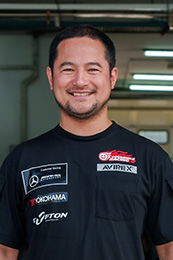
In practice, we fell behind in responding to the poor balance of the car, and that became the reason we couldn’t fight at the front. If we had been able to sort the setup properly, I think we could have raised our qualifying performance, which in turn would have allowed us to start further up and contest the race more strongly. That said, we still secured a minimum haul of points, so I see this as a weekend where we simply had to endure and accept what we got.
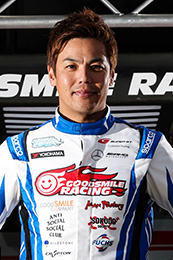
In the final race, I took over from Kataoka in 10th place, but the cars ahead were pulling away, and those behind never came close, so I found myself running in isolation. The car’s potential wasn’t bad, but it wasn’t particularly good either. I think the fact that we couldn’t identify the root cause of the poor handling in practice and therefore couldn’t advance the setup is what led to this result.
We did discover the cause after qualifying, which was good, but it meant the race itself was essentially run without proper preparation. If everything had gone right, I think we could have been fighting for fourth or fifth, which makes it a bit frustrating. That said, at least we avoided scoring no points. It wasn’t ideal that the championship frontrunners finished ahead of us, but I hope we can take the lessons from what happened here and apply them to the next rounds, especially the upcoming Fuji race.
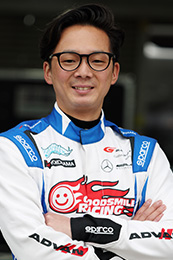
Practice was tough, with the car in poor condition and all our focus going into just trying to get it to a level we could accept. We kept making setup changes, and eventually reached something workable for qualifying, but that still only gave us 12th. I was hoping we could find some improvements before the race, and in the end, we discovered the problem with the rear damper. Once it was fixed, the car regained its proper performance. In warm-up, I thought, “Now we can do this,” but then we had a puncture. That raised concerns that if we kept the setup as it was, we might risk more punctures, so we adjusted the car to be gentler on the tires, even at the cost of outright performance.
In the race, the start went extremely well, and I was able to make up positions quickly, but once things settled, the performance wasn’t as strong as it had felt in warm-up. Even so, with the harder tires, we were able to run a stable race. At the first stop, I changed to a new set of the same compound and stayed in for a double stint. The lap times were very consistent, though not particularly fast, but I managed to keep us inside the top ten and hand the car over to Taniguchi in a solid position.