


GOODSMILE RACING & TeamUKYO RACE REPORT 5
2025 AUTOBACS SUPER GT Round 5 SUZUKA GT 300km RACE
Three weeks after the Round 4 Fuji GT Sprint Race, SUPER GT Round 5 was held at Suzuka Circuit in Mie Prefecture on August 23–24, with the summer heat showing no sign of letting up. As we enter the second half of the season, this race was once again key to gauging how the championship will unfold.
The No. 4 GOODSMILE Hatsune Miku AMG reached the maximum success ballast of 100 kg for the first time since 2017. Under this season’s GT300 success ballast system, up to 50 kg is added directly to the car, while any excess over 50 kg is managed via a fuel restrictor attached to the refueling system. This restrictor progressively narrows depending on the added weight, limiting fuel flow and extending pit stop times, effectively translating the success ballast into a time loss. Although this was the first time that a restrictor would be fitted during competition, pre-race calculations predicted a time loss of more than 10 seconds, making it extremely difficult to recover on track—a tough challenge for Car No. 4 and the other front-runners.
In addition, Balance of Performance (BoP) adjustments applied to GT300 class cars for this round increased the Mercedes-AMG GT3’s base weight by 60kg, from 1,285 kg to 1,345 kg. The air restrictors, which limit engine performance, were also reverted from φ35 mm × 2 used at Fuji Speedway back to φ34.5 mm × 2.
Saturday, August 23 【Official Practice, Official Qualifying Round】
Qualifying round weather: Fine
Course: Dry
Air temperature/Track temperature:
At start of GT300 Q1: 34℃/48℃
At start of GT300 Q2: 34℃/47℃
At end of the session: 33℃/46℃
Under the blazing morning sun and steadily rising temperatures, official practice began at 10:20 a.m. Tatsuya Kataoka took the wheel of the No. 4 GOODSMILE Hatsune Miku AMG and headed out onto the track. On his fourth lap, he set a time of 2:01.024, coming in 4th, but the car exhibited strong oversteer. To correct this, he returned to the pits on the following lap for roughly 15 minutes while the rear differential settings were adjusted.
After returning to the track, a GT500 class car crashed by the reverse bank, prompting a red flag to suspend the session. Following roughly 10 minutes of downtime, the session resumed, and on his 10th lap, Kataoka recorded a time of 2:00.341, placing 12th. After 12 laps, he returned to the pits and handed the wheel to Nobuteru Taniguchi, who refueled and began a long-run performance check. Taniguchi maintained a consistent pace in the 2:01 range, continuing through the subsequent Full Course Yellow (FCY) test and into the GT300 class-exclusive session.
Kataoka’s time of 2:00.341 on lap 10 was ultimately the fastest lap of the session, placing him 19th overall. However, he commented, “Considering the setup and tire condition, we can expect to improve in the qualifying round” making this practice session a promising indicator for both qualifier and the final race.
Qualifying Round 1 (Q1) was overseen by Taniguchi. In the GT300 Q1, 28 cars were divided into two groups of 14 based on team rankings, with Car No. 4 racing in Group A.
At 3:15 p.m., with an air temperature of 34°C and a track temperature of 48°C, the Group A session began. Taniguchi exited the pits at the green flag, completed two warm-up laps, and began his flying lap on the third timed lap. He immediately improved on his practice time by over a second, recording 1:59.071 for 3rd place. Although rivals improved their times and he dropped in position, he continued to push, recording 1:58.789 on the next lap and securing 4th place to advance to Q2.
Following GT300 class Group B and GT500 class Q1, Q2 got began at 4:08 p.m. under similarly scorching conditions—34°C air and 47°C track temperature. The top nine cars from each Q1 group, 18 cars in total, battled for pole position. Kataoka took the wheel of Car No. 4 and went out immediately after the session began. Following the same two-lap warm-up, he launched his flying lap on the third timed lap, recording 1:58.084 and placing 8th. Attempting further improvement, he set a personal best in Sector 1 but could not gain time in Sectors 2 and 3. As rivals improved, Car No. 4 ultimately finished 10th in the qualifying round.
Sunday, August 24 【Final】
Weather: Fine
Course: Dry
Air temperature/Track temperature
Pre-race (3:25 p.m.): 35℃/51℃
Opening laps (3.55 p.m.): 35℃/49℃
Mid-race (4.25 p.m.): 34℃/48℃
Closing laps (4.55 p.m.): 35℃/46℃
Goal (5:25 p.m.): 33℃/43℃
The sky over Suzuka started out clear in the morning, with temperatures continuing to rise as the day progressed. By the 2:00 p.m. warm-up, the air temperature had reached 36°C and the track temperature 56°C—hotter than the previous day. The starting driver for Car No. 4, which was lined up 10th on the grid, was Kataoka.
At 3:30 p.m., with an air temperature of 35°C and track temperature of 51°C, the race got underway under sweltering conditions, compounded by high humidity. A parade lap was first conducted, led by Mie Prefecture police motorcycles and patrol cars, followed by a formation lap behind the safety car (SC) before the 300 km race officially kicked off. Car No. 20, which caught fire during the warm-up, was unable to start and was classified as retired.
Both GT500 and GT300 classes had clean starts, but on the opening lap at 130R, Car No. 24 in the GT500 class veered off the track, fortunately returning quickly. In the GT300 class, cars No. 30 and No. 360, starting 24th and 27th respectively, made contact at the chicane, with Car No. 30 sustaining damage and retiring to the pits.
On lap 4, Cars No. 17 and No. 24 in the GT500 class collided at the chicane, causing Car No. 17, which was on the outside line, to crash into the barrier. This incident brought out the safety car. The pit lane opened as the SC made its rounds, and Cars No. 56, No. 87, No. 25, and No. 48 entered the pits to shorten their pit stop times, with Car No. 87 also having its front tires changed.
The race resumed on lap 10, with Car No. 4 maintaining 10th place and battling both Car No. 52 ahead and No. 0 behind.
When the pit window opened on lap 16, many competitors, starting with Cars No. 2 and No. 31, entered the pits, but Car No. 4 chose to stay on the track. As rivals made pit stops, the car moved up the ranks, taking the provisional top spot on lap 26.
With a clear track ahead, Kataoka significantly increased the pace, setting a personal best while completing multiple laps in an effort to minimize the time loss expected from the fuel restrictor during the upcoming pit stop.
After 30 laps, he entered the pits and handed over the wheel to Taniguchi. Fueling and a full four-tire change were completed before returning to the track. At the point of rejoining, the car was 8th among those who had already pitted, but before the tires had fully warmed up, he was overtaken by Car No. 52, and the team dropped back one position.
On lap 33, Car No. 26 suffered a radiator failure and was forced to stop at the side of the track, prompting the declaration of FCY for vehicle recovery.
On lap 34, when the race resumed, Car No. 22, which had delayed its pit stop until the end, finished being serviced, marking the point at which all cars had completed their pit stops. At this stage, Car No. 4 was running in 9th place.
On lap 35, as the race entered its final stages, Taniguchi set a personal best of 2’00.534 and began picking up pace and agressively pursuing Car No. 52, which was ahead of him.
The gap of over two seconds quickly closed, and on the exit of the hairpin on lap 40, Taniguchi drew alongside Car No. 52 and capitalized on a brief slowdown to overtake. However, slight contact with Car No. 52 at that moment subsequently resulted in a penalty.
On the following lap, lap 41, Car No. 777 running in 7th place slowed down following a blowout, allowing Taniguchi to pass and move up to 7th place.
On lap 45, Car No. 6 suffered a tire burst, allowing Car No. 4 to move up to 6th place. Debris from Car No. 6’s tire caused another FCY to be declared. The debris was quickly cleared, and the race resumed, with Taniguchi once again starting to close the six-second gap with Car No. 45.
However, on lap 47, a five-second time penalty was imposed for the contact with Car No. 52 during the battle on lap 40. With Car No. 666 7.4 seconds behind, Taniguchi needed to maintain the gap to avoid losing position. He continued to push until the end, completing 49 laps without allowing Car No. 666 to close in, and took the checkered flag in 6th place.
The win went to the No. 7 Ferrari, making its debut this season, followed across the line by the No. 60 Supra in 2nd and the No. 61 Subaru BRZ in 3rd. However, post-race scrutineering revealed a technical infringement on Car No. 60, resulting in its disqualification. This promoted Car No. 61 to 2nd place and Car No. 5 to 3rd. Car No. 4 also moved up one position, securing 5th place overall.
As a result of this race, Car No. 4 earned 11 driver points, placing it 4th in the championship, 16.5 points behind the leader. The team also scored 14 points, moving up to 2nd in the team standings, just 1.5 points off the top.
■Comments from the Team
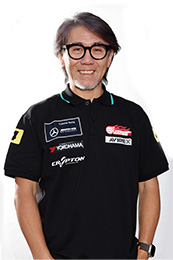
I think we did everything we could given the heavy handicap. Our aim was to capitalize on how well Yokohama tires perform in hot conditions, and I feel we managed to execute our strategy well and stay competitive despite the weight. Even though we finished 6th (at the time of this interview), I consider it a solid result. With the team now up to around 2nd place in the standings, it felt like a calm, controlled race.
The setup was good, the tires held up well, and the car had pace—we were able to run without being too affected by the handicap. That said, the extra weight still left us a little slower than some rivals. On top of that, the refueling handicap was significant, so it was difficult to make up much ground. But our strategy of getting ahead of the top-ranked competitors worked out better than expected, and overall I think it was a very good race.

Despite some trouble during free practice and an imperfect setup, the team qualified 10th. Starting from 10th on the grid, the car showed strong pace in the final. A bit of luck played a role, and the team gained ground as rivals encountered issues, ultimately closing the gap to just 1.5 points behind the leaders in the team standings. Overall, it was a very positive result.
With both the strategy and base setup proving effective, the focus now is on steadily building points in the second half of the season and fighting to win the championship right through to the end.
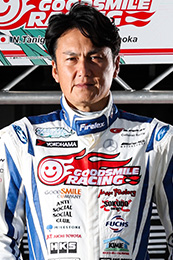
Starting from 10th on the grid, the long-run pace looked promising even during practice. However, we wouldn’t really know until the race began—whether the tires could hold up under these track and air temperatures, and how we compared with the others, could only be confirmed once we were out on track.
For this race, fuel restrictors were introduced, which meant we expected to lose significant time during pit stops and risk an overcut. Our strategy was for Kataoka to run a long first stint at full pace, while I would take a short stint with a lighter fuel load and new tires to move back up the standings. I was constantly hoping a safety car wouldn’t appear at an inconvenient time to ruin the plan, and fortunately, the race unfolded almost exactly according to our strategy.
When I entered the track, we were in 9th place after chaging drivers, and initially Car No. 52 got ahead while the tires were still warming up. But once they were at the optimal temperature, I was able to lap at a strong pace, overtake Car No. 52, and then gain further ground as a result of other cars running into trouble, finishing in 6th place. I think we performed very well in the race. The Yokohama tires we had were excellent, and despite carrying the handicap weight, Car No. 4 was able to maintain a faster pace than many our fellow competitors right to the end, which was very satisfying.
Of course, I would have loved to win when the tires were performing so well, but given the points accumulated and the handicap weight, that wasn’t realistic this time. Above all, it was great to finish ahead of the championship’s top-standing rivals. We’ll continue to fight hard in the remaining three races as we aim to win the championship.
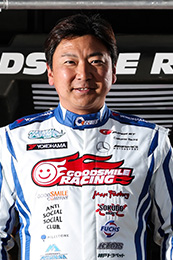
Competing in this final, I really felt the impact of the damper trouble we faced in practice, as it prevented us from fully setting up the car before qualifying and inevitably affected our starting position.
In the race itself, the car was in great condition, the tires performed well, and we were able to maintain a high pace.
Unfortunately, we got stuck behind cars No. 45 and No. 52, and at times they blocked us, which was frustrating. It’s disappointing to think that if we had qualified further up, none of that would have been an issue.
Looking at our speed on clear laps and after Taniguchi took over, it’s evident the race could have unfolded very differently with a better qualifying position. The car performed well, but the earlier trouble made it feel like a bit of a wasted weekend. That said, compared with previous years, I feel I’m now facing higher level challenges, so overall it was still a rewarding and worthwhile race weekend.